Since 2016 I’ve been following and writing about the evolution of Barbie. Outside of Wonder Woman, I can’t think of another doll that made such an impact on my life. Anyhow, I digress. We’re not here to talk about my childhood memories. We’re here to talk all things BARBIE!
I can remember the first modern turning point in the brand. Seven years ago I couldn’t wait to get to my PR campaigns class. Mattel had released three optional body shapes – petite, tall, and curvy – as well as seven different skin tones and a myriad of new hairstyles. I was elated to share this with my students. This campaign, which is chronicled in the Hulu documentary, Tiny Shoulders, was the first of an annual endeavor to make the iconic doll inclusive, diverse, modern, and dare I say permanently relevant.
Barbie has been a fascination for generations of children, sparking imagination and countless hours of playtime. But there is much more to this plastic powerhouse than meets the eye. Read on as I dive into the evolution of Barbie from her early days in the 1950s to the present day, uncovering how she transformed from a mere fashion icon to a symbol of empowerment and inclusivity. Get ready to unravel the secrets behind Barbie’s ponytail and witness her rise as a catalyst for change in our ever-evolving society. Brace yourself for a captivating ride that will leave you inspired, intrigued, and completely enthralled by the dazzling transformation of everyone’s favorite doll.
The Evolution of Barbie
Since her debut in 1959, Barbie has been an enduring symbol of feminine beauty and fashion. She has also undergone some major changes over the years, reflecting the evolving attitudes and styles of generations of girls. Here is a quick glimpse at some of the most significant moments in Barbie’s evolution:
• 1959 – March 9, 1959, Barbie is introduced to the world as a fashion doll with her trademark blonde ponytail.
• 1961 – Barbie gets her first makeover, with a new hairdo and updated wardrobe.
• 1963 – Barbie goes global, becoming available for purchase in countries outside the US.
• 1964 – Formal wear Barbie and Ken, and the first bendable leg Barbie.
1965 – Bubble Cut Barbie is released.
• 1967 – Mattel introduces “Barbie Fun Facts”, educational information printed on the back of Barbie’s packaging.
• 1971 – Mattel releases “Trailblazer Barbie”, featuring Barbies with different skin tones and hairstyles.
• 1975 – Barbie gets her own line of animated specials, beginning with “The Romance of Betty and Bob”.
• 1980 – Mattel introduces the first Black and Hispanic Barbie.
• 1985 – Barbie launched the We Girls Can Do Anything ad campaign.
• 1992 – Barbie first ran for president. Since then, she’s run for president seven times.
• 2009 – Barbie held her first New York runway show at Mercedes-Benz Fashion Week to celebrate her 50th anniversary.
• 2014 – Barbie became a social media influencer with the launch of the @barbiestyle Instagram account.
• 2015 – Barbie launched a vlog on YouTube to talk directly to girls about issues they face.
• 2018 – Barbie shined a light on empowering role models from the past and present in an effort to inspire more girls. The campaign, #MoreRoleModels, honored extraordinary women from around the world on International Women’s Day.
• 2023: A new doll with Down syndrome is released.
Barbie in the 1950s: Ponytail Pioneers
The 1950s were an iconic time for Barbie dolls. The original doll was introduced in 1959, and it quickly became a best-seller. Barbie was different from other dolls on the market because she was a fashion model. She was also the first doll to have her own line of branded clothing and accessories. Barbie was an instant hit with young girls, who loved dressing her up in the latest fashions.
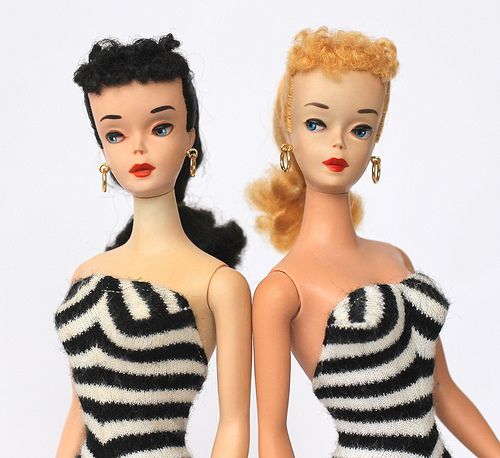
The Ponytail Era Barbie dolls are some of the most collectible Barbie dolls today. These dolls were produced from 1959 to 1964 and featured ponytailed hairstyles. The first Ponytail Barbie doll was released in 1959 and featured blonde hair. The following year, a brunette version was released. Both of these dolls are highly sought-after by collectors.
Barbie clothes from the 1950s are also very collectible. Some of the most popular items include the Zebra Bathing Suit (1959), Roman Holiday Outfit (1961), and Wedding Day Set (1964) [This one is going for nearly $3,000!]. Many of these items are still available for purchase today, either through online retailers or at vintage toy stores.
Barbie in the 1960s: Swingin’ Sixties Sensation
In the 1960s, Barbie was a swinging single gal with a few careers under her belt. She was the first doll to don a miniskirt and white go-go boots, giving girls around the world a new sense of fashion and independence. In 1967’s Barbie in the Pink Shoes made its screen debut. In real life, she became an astronaut, doctor, and other professional role models for young women.
But Barbie’s most important contribution in the 1960s may have been her cultural significance. As girls began to challenge traditional gender roles, Barbie became both a symbol of change and a target for criticism. With her perfect figure and ultra-feminine style, some saw her as everything that was wrong with society’s view of women. Others saw her as a powerful role model who showed that girls could be anything they wanted to be. Love her or hate her, there’s no denying that Barbie made a big splash in the 1960s – and she hasn’t stopped making waves since.
Barbie in the 1970s: Far Out Fashions

For Barbie in the 1970s, it was all about far-out fashions. The ever-popular doll sported some of the most popular trends of the decade, including bell-bottom jeans, tie-dyed shirts, and headbands. While her fashion sense may have been ahead of her time, Barbie’s iconic status remained firmly intact. And for many girls growing up in the 1970s, Barbie served as a fashion icon and role model. This era saw Ballerina Barbie, Fashion Photo Barbie, Kissing Barbie, and even Growing up Skipper. Not intentional, but one of the most notorious Barbie dolls, Growing Up Skipper, was based on a simple idea: just twist her arm and she would grow ¾ of an inch and develop a bust. The tagline at the time was “She’s 2 dolls in 1!” Unfortunately, this doll was a flop. Parents felt it was inappropriate for their children to be playing with a doll who went through puberty. Sales faltered, making Growing Up Skipper difficult to find on the secondary market. Mattel also released Growing Up Ginger, a companion to Skipper that was similar. Ginger was also not well received, making her just as difficult to find.
Barbie in the 1980s and 1990s: Career Boom and Body Boon
In the 1980s, Barbie dolls saw a career boom with the release of the Career Girl line. These dolls were designed to inspire girls to pursue their goals and dreams, and they came complete with a range of professional outfits and accessories. Barbie also became more athletic in the 1980s, thanks to the release of the Barbie Fashion Model Collection. These dolls had poseable joints and realistic features, making them perfect for fashion-savvy girls who loved to play dress-up.
The 1990s were a big decade for Barbie, with the release of several popular lines including Teen Talk Barbie, Jewel Secrets Barbie, and Ballet Wishes Barbie. Barbie also became more diverse in the 1990s, with dolls available in a variety of skin tones and hairstyles. And in 1997, Mattel released My Size Barbie, which was significantly taller than other Barbies on the market and quickly became a best-seller.
Barbie from 2000 to 2020: New Age Activism and Liberation
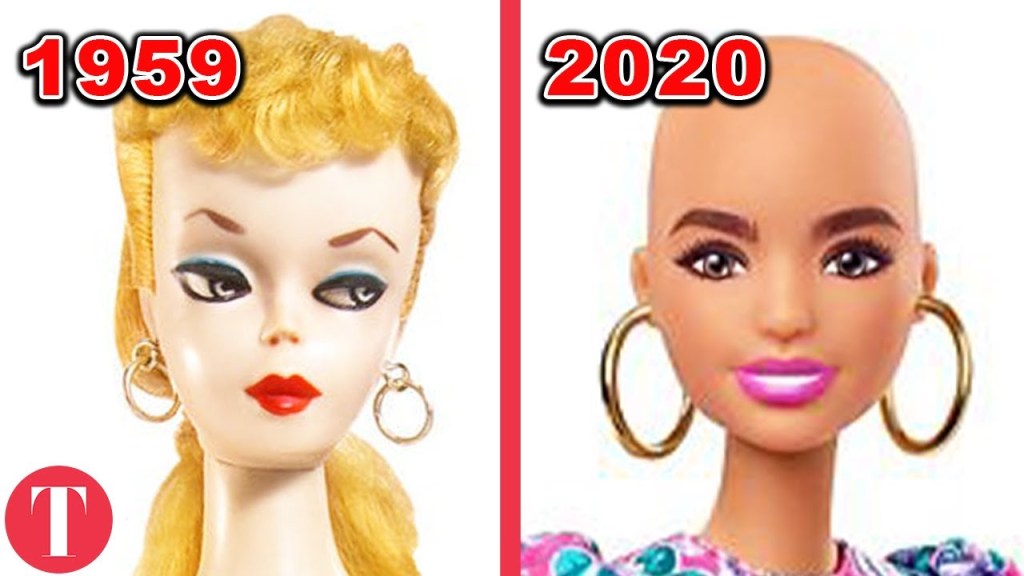
In 2020, Barbie celebrated her 60th anniversary. She has come a long way since her debut in 1959 as a teenage fashion model with impeccable style. In the intervening years, Barbie has played many roles, from princess to president, astronaut to doctor. With each incarnation, she has embodied the zeitgeist, whether that was disco fever in the 1970s or yoga-toned abs in the 2000s.
But it is in the past 20 years that Barbie has undergone her most radical makeover. In 2000, Mattel released a diverse line of Barbies with different body types, skin tones, and hairstyles. This was followed by a “Shero” line of dolls honoring inspiring women such as Frida Kahlo, Rosa Parks, Ava DuVernay, Emmy Rossum, Eva Chen, Kristin Chenoweth, Sydney “Mayhem” Keiser, and Trisha Yearwood. Then in 2019, Mattel launched a gender-neutral doll called Creatable World.
The Future of Barbie 2023 and Beyond: Inclusive Representation
With each evolution, Barbie has become more inclusive and representative of the real world. But she has also taken on a more activist role, using her platform to champion causes such as gender equality and environmental protection. As Barbie enters her seventh decade, it’s clear that she is no longer just a toy – she is a force for change.
As we move into the next decade, it is clear that Barbie will continue to evolve to better reflect the world around us. Today Barbie is available in an even wider range of shapes, sizes, and colors. The recent Barbie movie has illustrated just how relevant she still is. Barbie will continue to be a powerful force for good in the world, empowering girls of all ages to reach their full potential.
 Gina Luttrell
Leave a comment