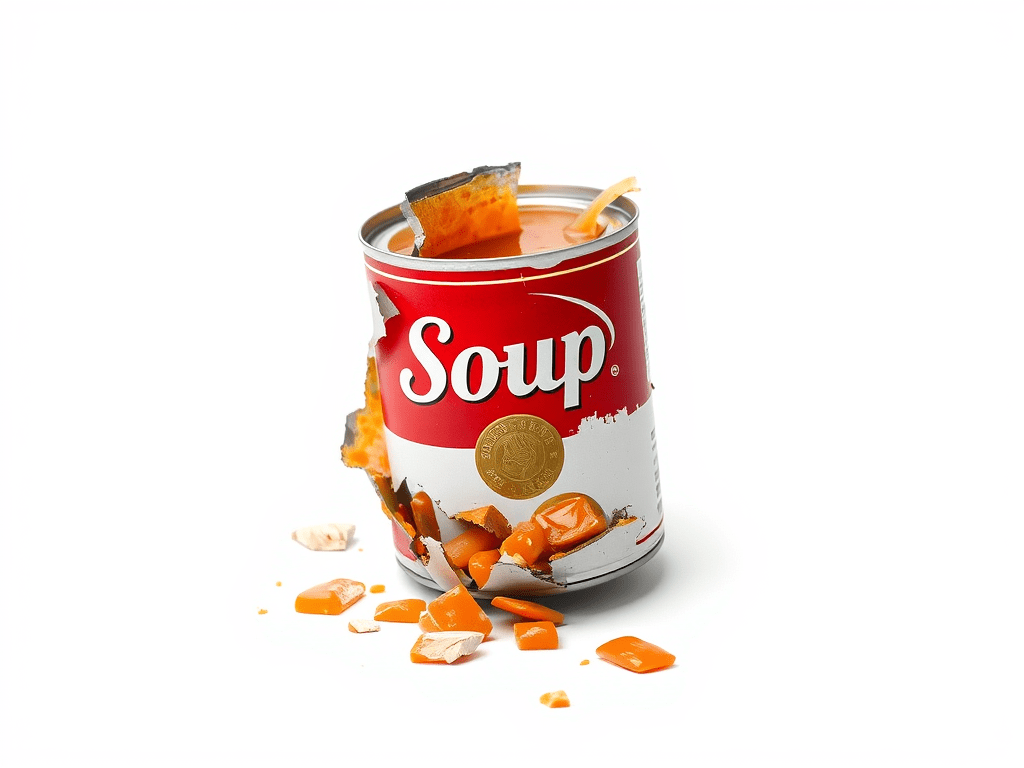
The news out of Campbell’s this week is a PR nightmare come to life. According to a recently filed lawsuit, a senior executive, Martin Bally, Vice President and IT Chief, was secretly recorded. He described Campbell’s soups as “shit for f@#%ing poor people.” He allegedly disparaged the company’s own products and customers, and made racist remarks about Indian employees.
The recording reportedly dates to a November 2024 salary meeting, which instead turned into a profane rant. In it, he allegedly criticized the “quality” of Campbell’s soups, referenced “bioengineered meat,” disdainfully mocked customers, and disparaged colleagues. The former employee who recorded the conversation, Robert Garza, says he was terminated roughly 20 days after reporting the comments to a supervisor. He now claims wrongful termination and a racially hostile work environment.
Campbell’s responded by placing Bally on temporary leave. In a company statement, they wrote “The comments heard on the recording about our food are not only inaccurate—they are patently absurd”
It’s a dramatic story for many reasons. So, what should they do?
What Companies Can Learn & How to Respond
Situations like this aren’t just PR flare-ups. They reveal deeper questions about culture, leadership, and how organizations live their values when the cameras are off. And while Campbell’s happens to be the example in the headlines, the lessons apply to any company navigating a messy internal-meets-public crisis.
First, speed matters. When damaging comments surface, especially from a senior leader, people want to see immediate acknowledgment. Not defensiveness, not spin. Just clarity that the company understands the seriousness of the moment and is taking action.
Next comes transparency. Investigations shouldn’t be mysterious processes where updates vanish into HR black holes. Modern audiences expect visibility: What steps are being taken? Who is conducting the review? How will findings be shared? Even broad updates show that the company recognizes its responsibility to the public and to its own employees.
This is also a moment to reinforce values in a way that feels real rather than rehearsed. If the comments contradict what a company claims to stand for, then leadership has to bridge that gap. That means addressing not only the specific incident but also the broader culture. Are employees comfortable reporting concerns? Do systems protect them? Are leaders being held to the same standards as everyone else?
Clear communication around product quality and safety is equally important. Rumors spread quickly, especially around food. A simple, steady explanation of sourcing, safety, and standards goes a long way in calming speculation. It’s not about promoting the brand, it’s about offering facts that help people make sense of conflicting information.
Finally, companies need to show follow-through. People have long memories when scandals involve class, race, or disrespect toward consumers. A crisis like this can either become a permanent stain or a turning point. The difference usually lies in whether an organization treats it as a PR problem to “fix,” or a cultural moment to genuinely learn from.
Handled thoughtfully, a company can emerge with stronger systems, more intentional leadership, and a clearer sense of who it wants to be. Handled poorly, the incident becomes shorthand for hypocrisy. The choice, as always, is in the response.
 Gina Luttrell
Leave a comment